17 October 2026
In October, in Biccari, the nets go down under the olive trees. How we harvest our olives and why they reach the mill within 10 hours.
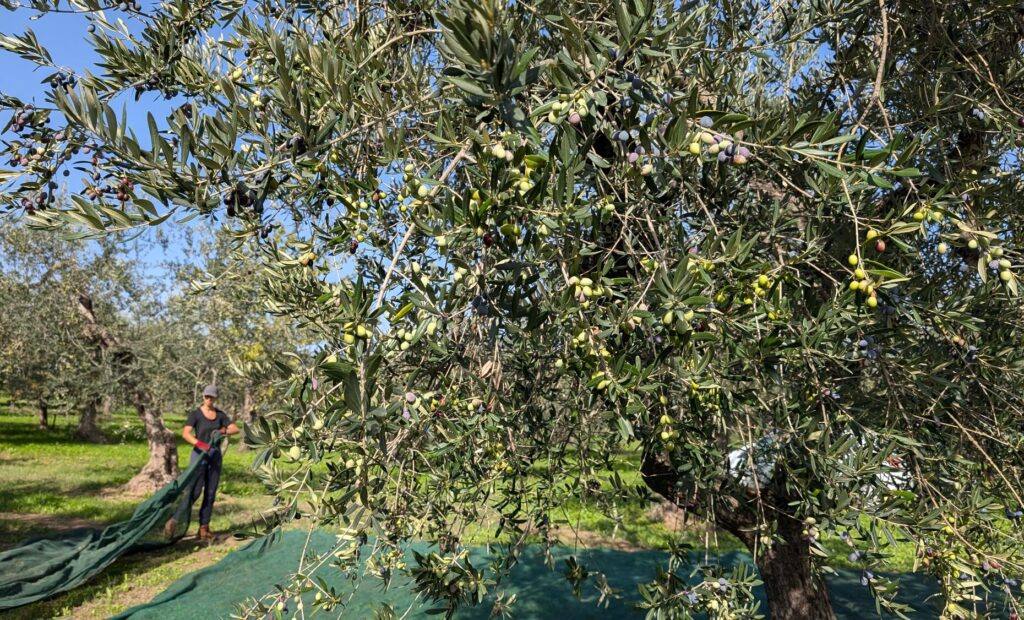
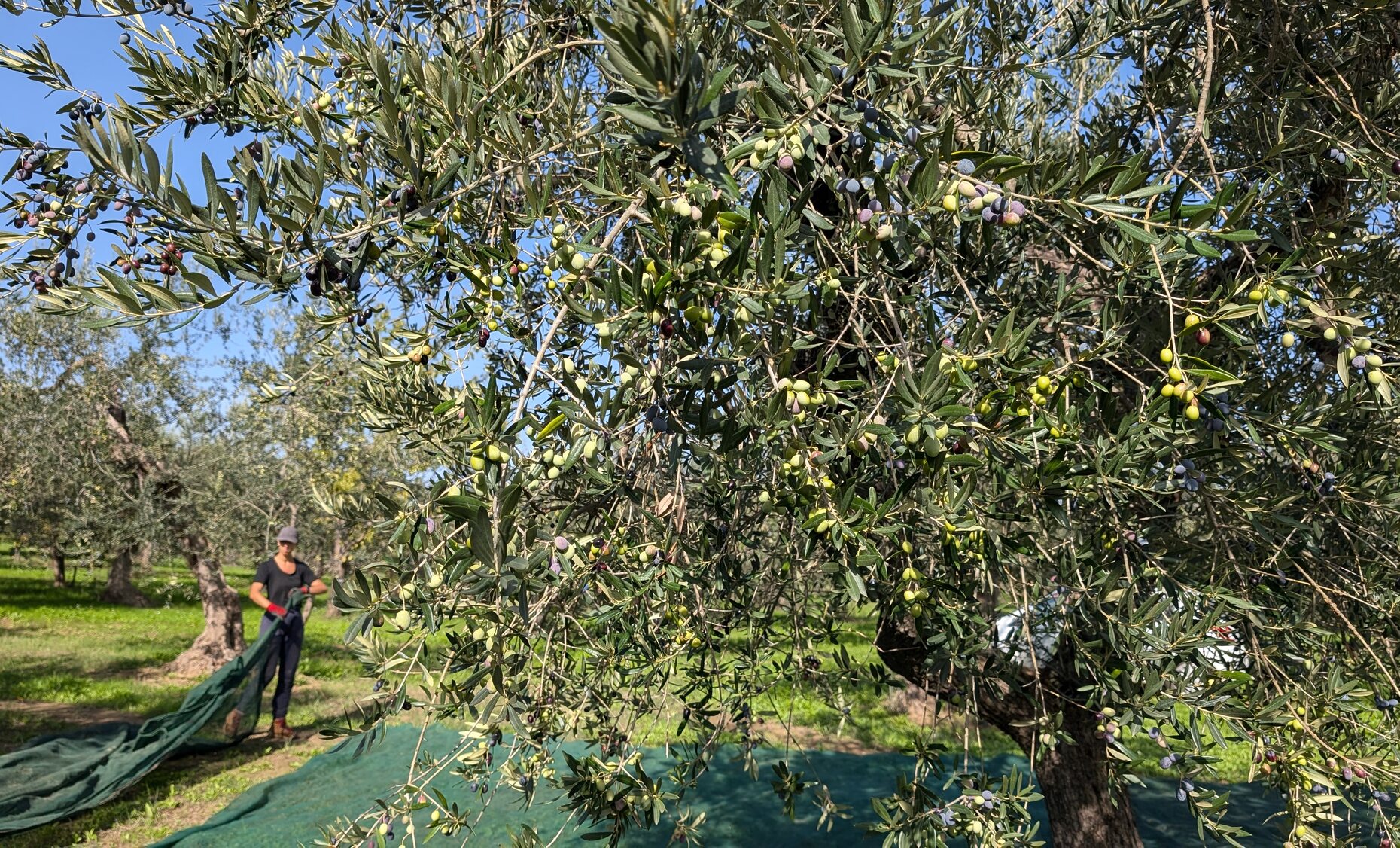
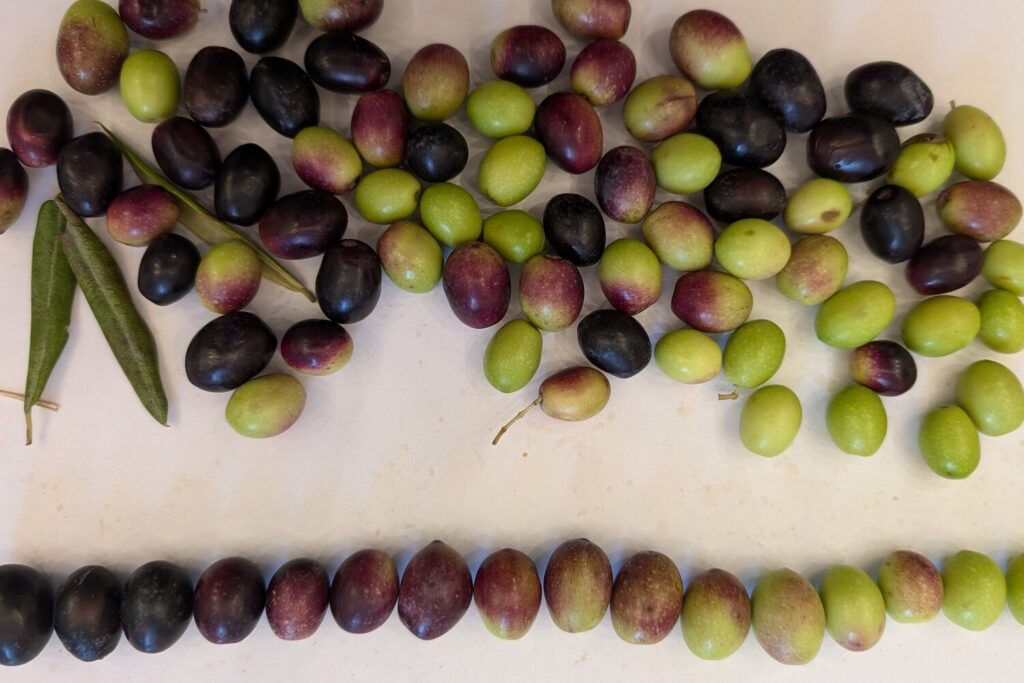
In Biccari the olive harvest begins in October. On the branches some olives are still green and others have already turned purple: at this stage they give less oil, but the most fragrant oil, with the bitterness and pungency you then find on your plate. This is how we work, from the tree to the tank.
The riper the olive, the more oil it contains. Meanwhile, though, it loses aromas and polyphenols, the substances that give bitterness and pungency and protect the oil from oxidation. Harvesting early means giving up a little yield to have a green, lively oil.
The result can be measured. In the analyses of the 2023 harvest our oil had 772 mg/kg of total polyphenols, and the tasting panel described it as medium green fruity, with medium bitterness and pungency and aromas of almond, grass, artichoke and herbs. We explain what these numbers mean in how to read the analyses of an olive oil.
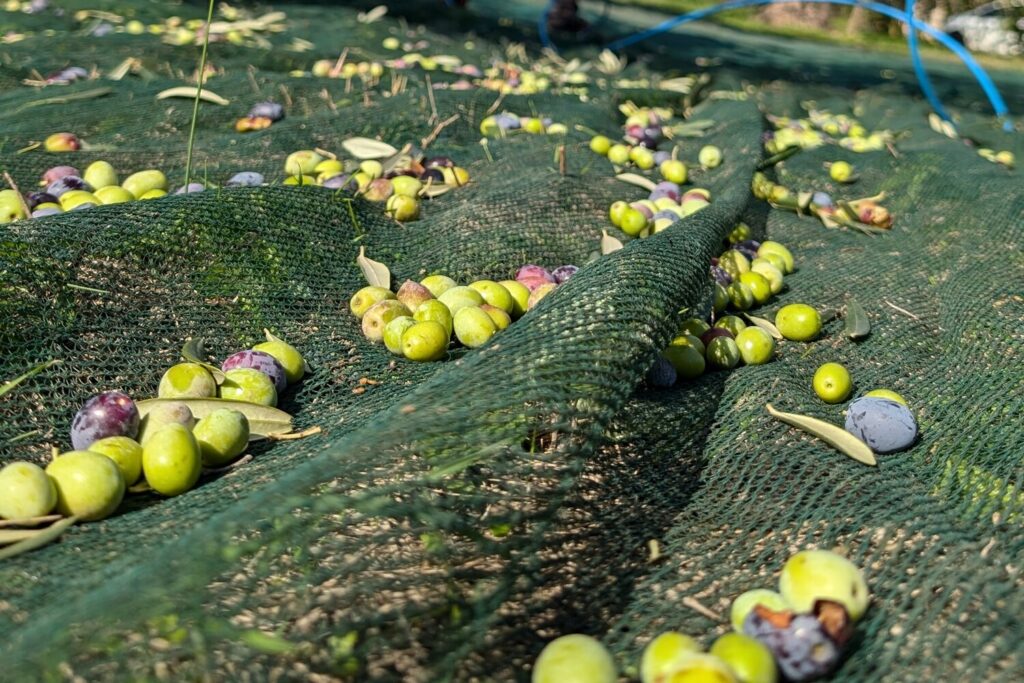
Under each tree we lay the “racanelle”, the large nets that catch the falling olives. Then we work through the branches with handheld harvesters, poles with a vibrating comb that shakes the fruit down onto the net.
Simona remembers how, as a little girl, she and her sisters picked up the olives that had fallen to the ground, while the grown-ups climbed ladders to reach the branches: the country habit was to waste nothing.
From the nets the olives go into vented crates. The holes let the air circulate: piled up in a sack, the olives would heat up and start to ferment, and that defect would pass into the oil.
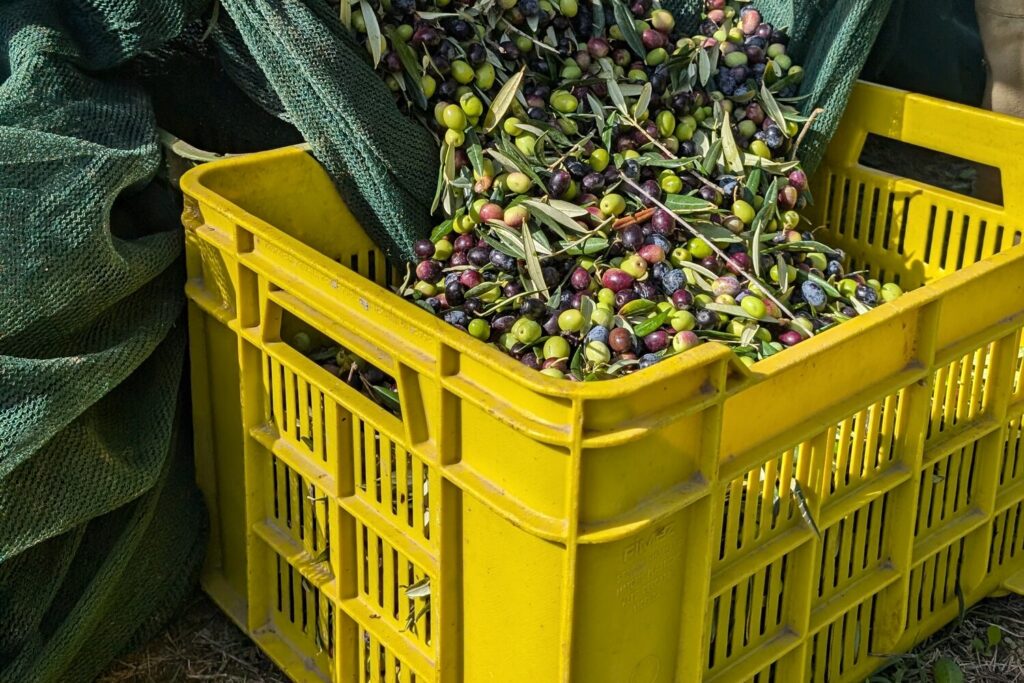
From the moment the olive leaves the branch, time counts: the longer it waits, the higher the acidity rises and the greater the risk of defects. That is why we take the olives to the mill within 10 hours of picking.
The local mill we rely on works on a continuous cycle. The olives are cleaned of leaves and washed, then crushed and malaxed (slowly kneaded), with the extraction temperature kept under control: that is what saves the aromas. The two-phase decanter separates the oil from the olive paste using little water, so the polyphenols stay in the oil instead of being washed away with the water.
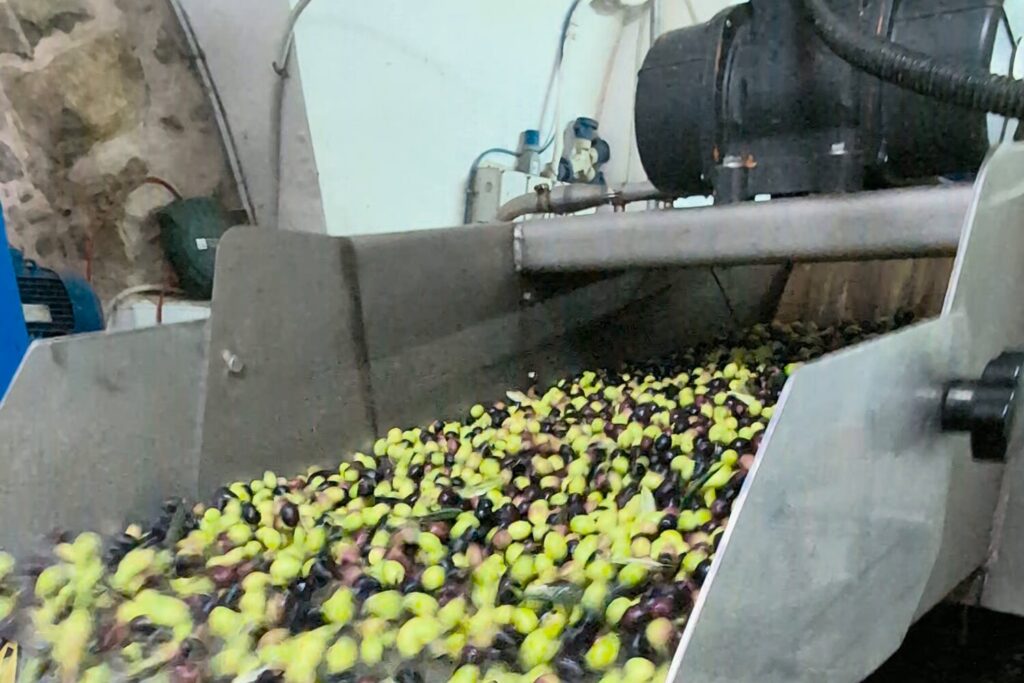
Straight afterwards the oil is filtered through pads of pure cellulose, which hold back the remaining pulp and water. A clear oil keeps better, because over time those residues would ferment.
The filtered oil rests in our stainless steel tanks, under nitrogen and at a constant temperature. The nitrogen takes the place of the air above the oil: without oxygen the oil oxidises much more slowly and keeps the aroma of freshly crushed olives for longer.
Before it reaches your table we have it analysed in a laboratory and tasted by a recognised panel: acidity, peroxides, spectrophotometric indices, polyphenols and panel test.
For the olive fruit fly we use pheromone traps, which tell us when and where it has arrived: that way we act only where it is needed and at the right time. And the pomace, what is left of the olives after extraction, is not thrown away: the plant where our olives are milled recovers the crushed stones from it, which are used as fuel.
The name Contrada Ingegnoso comes from the place where grandfather Peppe bought an abandoned olive grove, fewer than a hundred trees near the village. His children walked there and saw it come back to life. Today it is looked after by Aurelio, Simona’s father, and her mother Michelina has filled it with flowers.
You will find our oil in the 500 ml bottle and in the 3-litre Bag in Box, which protects it from air and light even after opening. To keep it at its best at home, read how to store extra virgin olive oil.
Bring the best of Puglia to your table
Artisan extra virgin olive oil from the Monti Dauni: limited harvest, laboratory analyses, free shipping in Italy over €89.
DISCOVER OUR OILSOriginal price was: €76.40.€68.76Current price is: €68.76. -10%
Pre-order